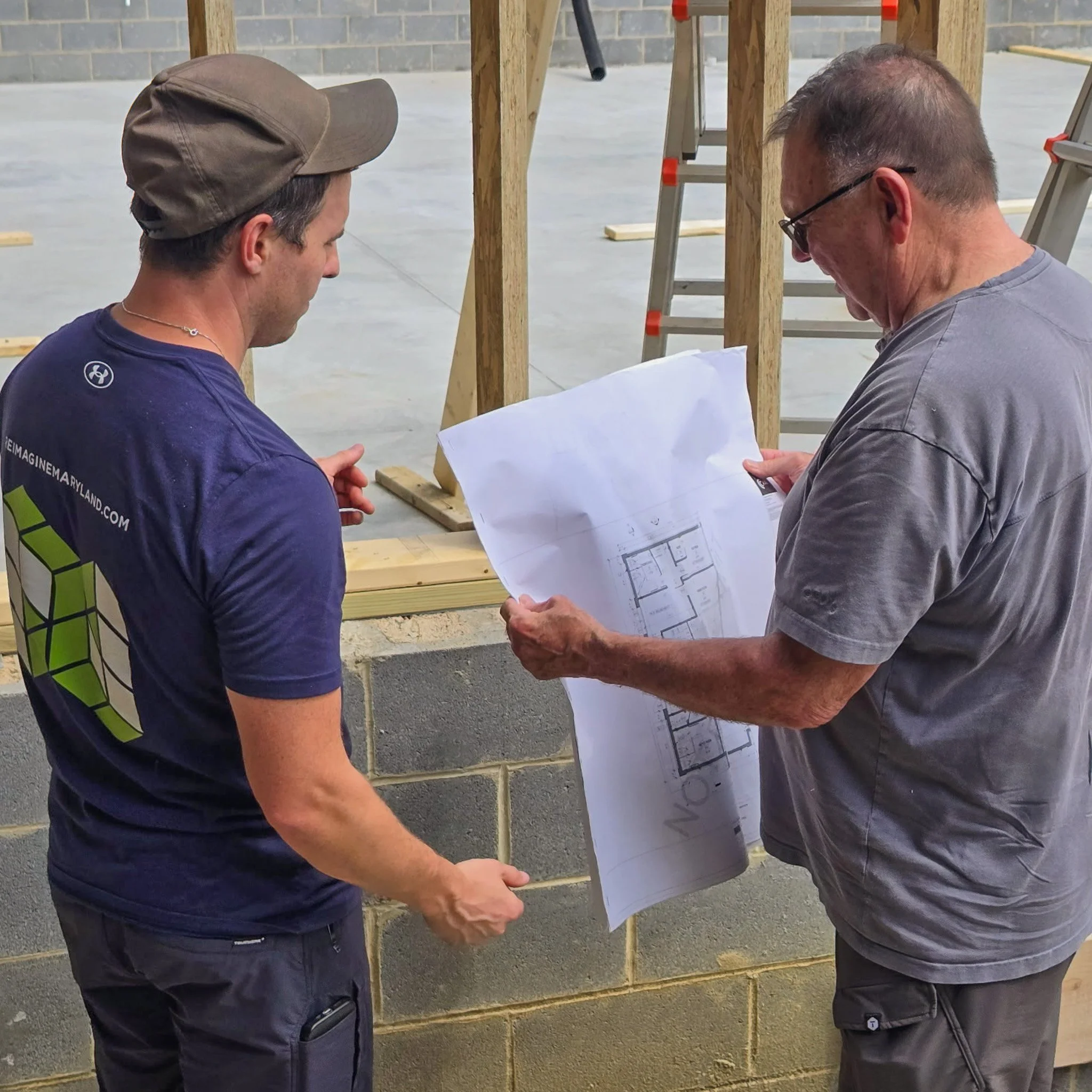
Choosing a remodeling contractor is not just about price. It is about who you trust with your home, your investment, and the final result.
A clear scope and a steady working relationship matter long before construction starts.
If you choose the wrong person, you will feel it throughout the entire project. Delays, surprise costs, unclear decisions, and a finished space that does not feel quite right often trace back to that one decision.
If you are planning a remodeling project, here is how to give yourself a better chance of getting it right from the start.
Start with an informed price evaluation
Price matters. It should.
But an informed price evaluation is not about picking the lowest number. It is about understanding what each number actually represents.
The National Association of Home Builders recommends being cautious of unusually low-priced bids, because a low number can sometimes point to missing scope or unrealistic assumptions about what it takes to complete the work.
Two proposals can look very different on paper, even if they are aiming at a similar end result. One may include higher-quality materials, more detailed craftsmanship, and full project coordination. Another may leave out key elements that only show up later as added costs or compromises.
Instead of asking, "Which number is lower?" ask, "What is included here, and what kind of result is this price built to deliver?"
When you look at price this way, you are not just comparing numbers. You are comparing outcomes.
Make sure you understand the scope
A lot of remodeling frustration comes from one simple issue. You thought something was included, and it was not.
Before you move forward, make sure you clearly understand what is included, what is not included, the level of finishes, and any allowances for materials.
ConsumerAffairs recommends comparing contractor bids carefully and reviewing details like scope, timeline, payment expectations, and project terms before making a decision.
If those things are not clearly defined, you are not comparing complete projects yet. You are comparing partial pictures.
Pay attention to how they work
Every contractor will tell you they do high-quality work.
What matters is whether they can explain how they actually deliver it.
You should feel comfortable asking how the project will be managed day to day, how communication will work during the build, and what happens when decisions come up mid-project.
These are the details you will live with every day, and they are often where quality really shows.
Ask how changes are handled
No project goes exactly as planned. You will make decisions along the way.
The important question is how those decisions are handled.
You want to know whether changes will be clearly documented, whether you will understand the cost before moving forward, and whether there is a consistent process in place.
Written change orders help protect both the homeowner and the contractor by documenting changes to the original agreement, including added cost, timing, and scope.
Without that structure, small changes can turn into big surprises.
Understand how the project is structured
A remodeling project is not just a list of parts. It is a coordinated effort between people, materials, scheduling, and oversight.
When everything is working together properly, the result feels cohesive and intentional. When it is not, even good materials can lead to a disappointing outcome.
This is why the way a project is presented matters just as much as the price itself. A complete, clearly written agreement gives everyone a shared understanding of what is being built, how decisions will be handled, and what expectations are in place. NAHB specifically recommends making sure your builder or remodeler provides a complete and clearly written contract.
Choose someone you feel comfortable trusting
At the end of the day, this decision is not just technical. It is personal.
You are inviting someone into your home and trusting them to guide a major investment.
You should feel like you are being heard, you are getting clear answers, you are not being rushed or pressured, and you have someone helping you think things through.
NAHB encourages homeowners to consider whether they can communicate easily with the remodeler, since you will be in close contact throughout the construction process and after the work is complete.
If you feel unsure or like you are figuring everything out on your own, that is worth paying attention to.
Final thought
When you choose the right contractor, the project feels clear, steady, and intentional.
When you choose the wrong one, even small decisions start to feel stressful.
If you take the time to approach your project with an informed price evaluation and a clear understanding of scope and process, you put yourself in a much better position to get a result that feels right every time you walk into the space.
What to compare before you hire
Scope Look for a complete project scope, clear inclusions, defined exclusions, and allowances that are easy to understand.
Process Ask how communication, scheduling, decisions, and change orders are handled before work begins.
Trust Pay attention to whether the answers feel clear, patient, and grounded in the actual project.
Use the Start Your Project button below to share what you are considering. We will help you think through scope, fit, feasibility, and the next steps before anything feels rushed.